U.S. News Money
Ad-Safe AI Reading Assistant
Intent-Driven AI Chat for Finance Content
I designed an AI assistant on USN Money article pages to help search-driven readers understand faster, decide sooner, and take the next step—while protecting ad revenue as a non-negotiable guardrail.
Time
Jun–Aug 2024
Role
Design Lead
Tools
Cursor, Figma, Chat GPT
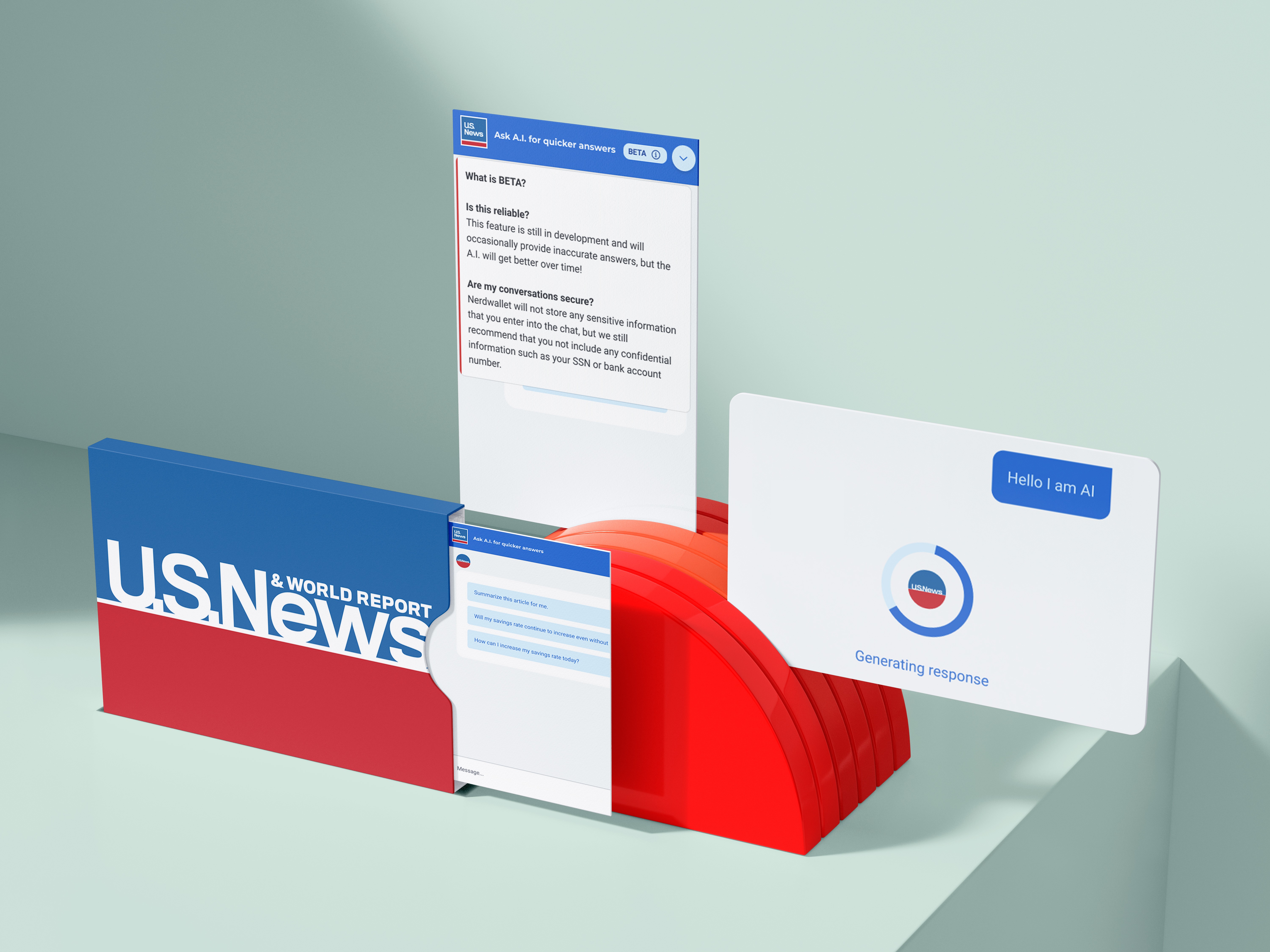
Why we built this: AI wave + growth pressure
This project started under a company-wide AI strategy push: US News wanted to build AI capability that could survive real business constraints, not a demo feature.
The growth goals were clear: increase total revenue per visit, drive deeper internal browsing (more pages per session), and increase long-term value by turning one-time readers into repeat researchers.
01
Revenue lift
Increase Revenue per Visit by lifting Lead/External Clicks, while keeping Ad Revenue/Visit non-decreasing.
02
Deeper + repeat usage
Increase Pages/Session and Return Sessions/User by improving Internal CTR from article pages.
My first move: use AI to speed up UX research with data
At the beginning, even the PM didn’t have a strong hypothesis about what an “AI module” should do on an article page. As the design owner, I decided not to start with UI sketches. I started with evidence.
I used AI to accelerate the analysis workflow: instead of manually spending days stitching metrics into a story, I used AI to quickly interpret patterns, compare segments, and translate numbers into behavioral explanations we could act on.
55%
Sessions come from SEO landings (search-driven readers).
39%
vs
27%
SEO users bounce more (39%) than non-SEO (27%) — higher intent, lower patience.
1.42
pages/visit
Readers typically consume one page and leave.
20% → 60%+
~20% decision-heavy articles drive 60%+ of external/lead clicks.
From metrics to real pain: what readers actually struggle with
The analytics told us where the leakage was happening, but not why people left or what they tried right before they bounced.
So we ran ~20 interviews plus a few-hundred-response survey to reconstruct the reading moment: what users came for, where they got stuck, and what “next step” actually means to them.
Insights
Readers arrive with a task, not time
Search readers land with one job to do—pick, compare, estimate, or decide—so they need the takeaway fast.
Dense content, easy to lose the thread
Money pages feel useful but heavy; users skim, lose context, and drop off.
Trust bar is high: it must feel professional and grounded
Finance readers don’t tolerate vague or “casual” answers—if it feels unprofessional, trust drops immediately.
Article type changes user intent
Finance readers don’t tolerate vague or “casual” answers—if it feels unprofessional, trust drops immediately.
Understanding isn’t enough; users need a next step
Understanding doesn’t finish the job—users still need a clear next step to move forward.
Design direction
01
Get oriented fast
Reduce first-landing confusion by designing for scan-first reading: clarify “what this page is about” and surface the key takeaways early, so search users can anchor themselves in seconds.
02
Match the page to the user task
Treat article type as a context signal and align the experience to the reader’s likely task (learn / compare / decide), instead of forcing one generic flow across all Money pages.
03
Move forward—safely
Design the experience to turn understanding into next-step actions while staying credible and ad-safe: make trust and monetization guardrails part of the interaction rules, not afterthoughts.
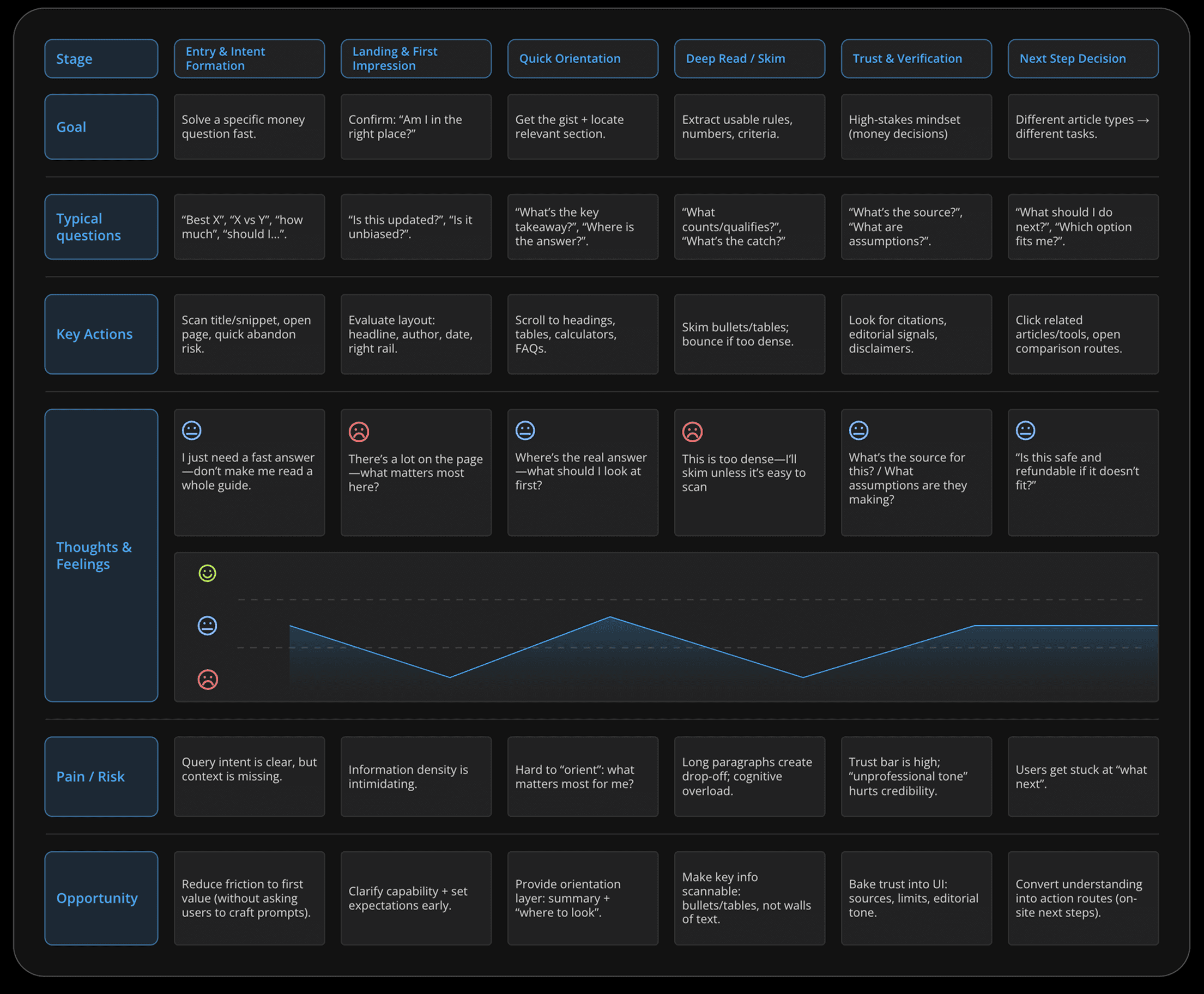
Journey Map
Competitive Patterns: What Works, What Breaks, and Why
After we confirmed the core user pains in research, we ran a focused competitor scan (ChatGPT, NerdWallet, Bing AI) to see how mature assistants handle three hard problems on finance content: entry without distraction, answers that stay trustworthy, and a clear path to the next step. This helped us translate abstract intent into concrete interaction patterns and set realistic guardrails for an ad-funded reading experience.
Learning + Opportunity
Task-first entry beats blank chat: General chat assumes users can ask well; our opportunity is to make “good prompting” a UI default—start with a few task-shaped starters that match the page, not a blank box.
Trust is designed, not claimed: In finance, credibility comes from tone + boundaries; our opportunity is to answer grounded in the page, and clearly state limits or redirect when the page can’t support a recommendation.
Answers must move users forward:The best assistants don’t end at “nice text”; our opportunity is to structure outputs for scanning and always include the next step—relevant USN links/tools + a few smart follow-ups.
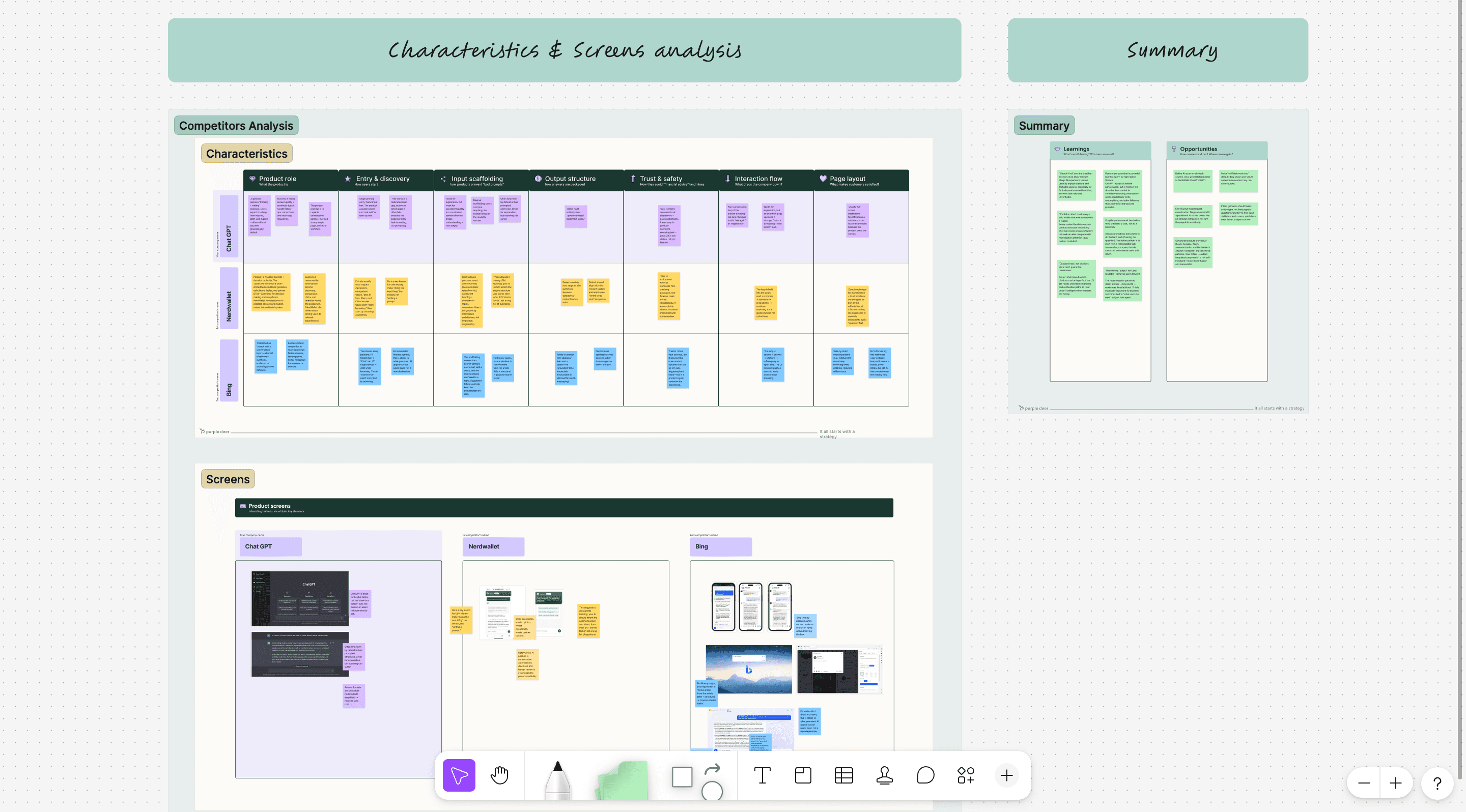
📑 Competitive analysis board (FigJam) ↗
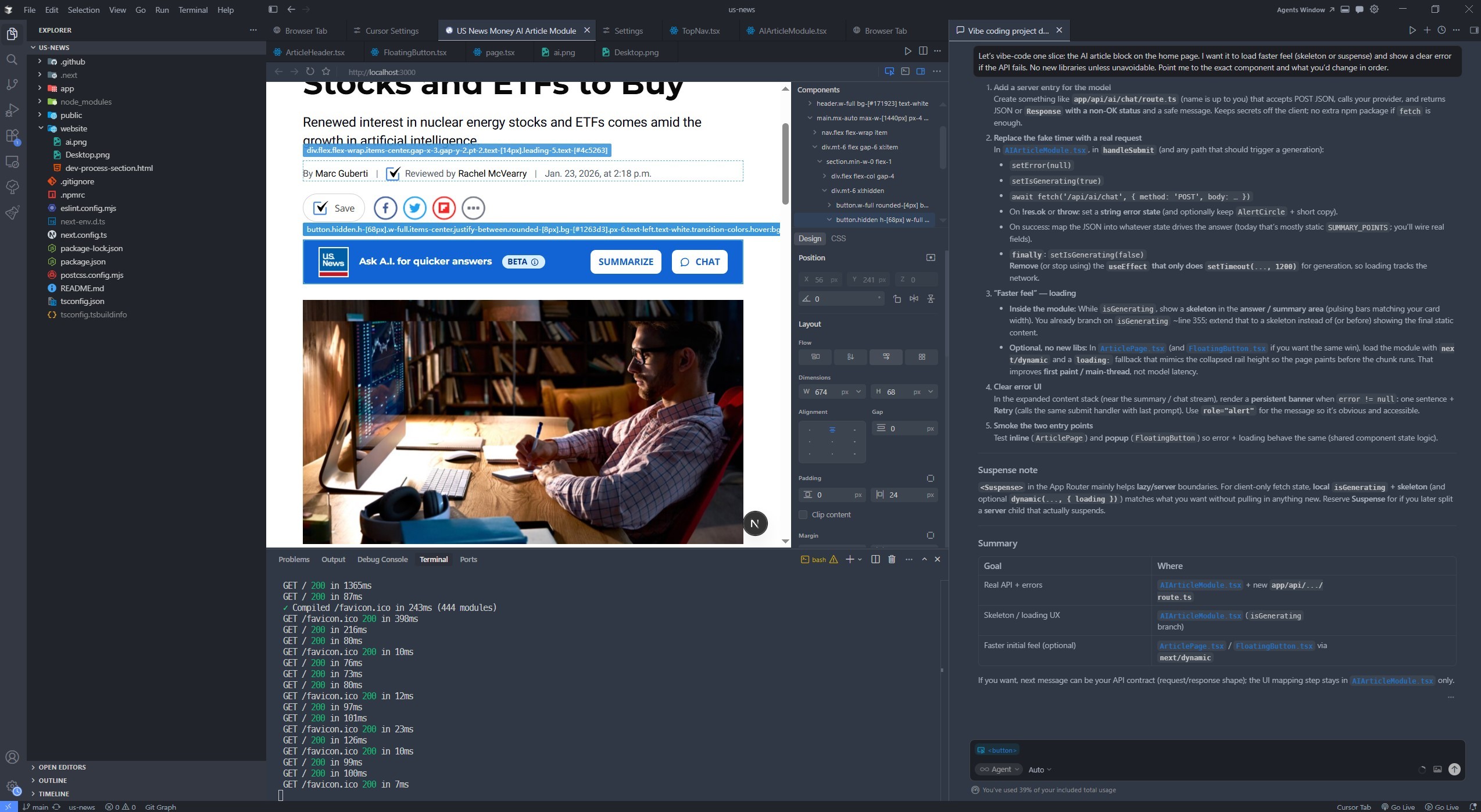
Cursor Prototyping + Internal Testing
To move fast, I embedded AI directly into my UX workflow—instead of debating “where should the chatbot live” in docs, I made it tangible.
Using Cursor, I produced a set of real, working article-page demos. Each version changed just one variable—the entry point and how chat fits into the reading flow—so the team could compare patterns without noise.
We evaluated options against two constraints: discoverability and monetization guardrails. V1 increased visual fragmentation, V2 pulled attention from the right rail, and V3 preserved right-rail inventory with the lowest-friction, moment-of-need entry—so we shipped V3.
Evolution
1
Embedded, right-aligned (3-column)
Expands into a third column (Article + Ads + Chat).
2
Right-rail anchored (above ads)
Opens in-place on the right rail surface.
3
Floating trigger near reading
Floating entry near the article; opens without layout reflow.
We evaluated options against two constraints: discoverability and monetization guardrails. V1 increased visual fragmentation, V2 pulled attention from the right rail, and V3 preserved right-rail inventory with the lowest-friction, moment-of-need entry—so we shipped V3.
Not a chat box — a “reading helper”

How can I increase my savings rate today?
Summarize this article for me.
What is the current national average savings rate for savings accounts?
Will my savings rate continue to increase even without Federal Reserve action?
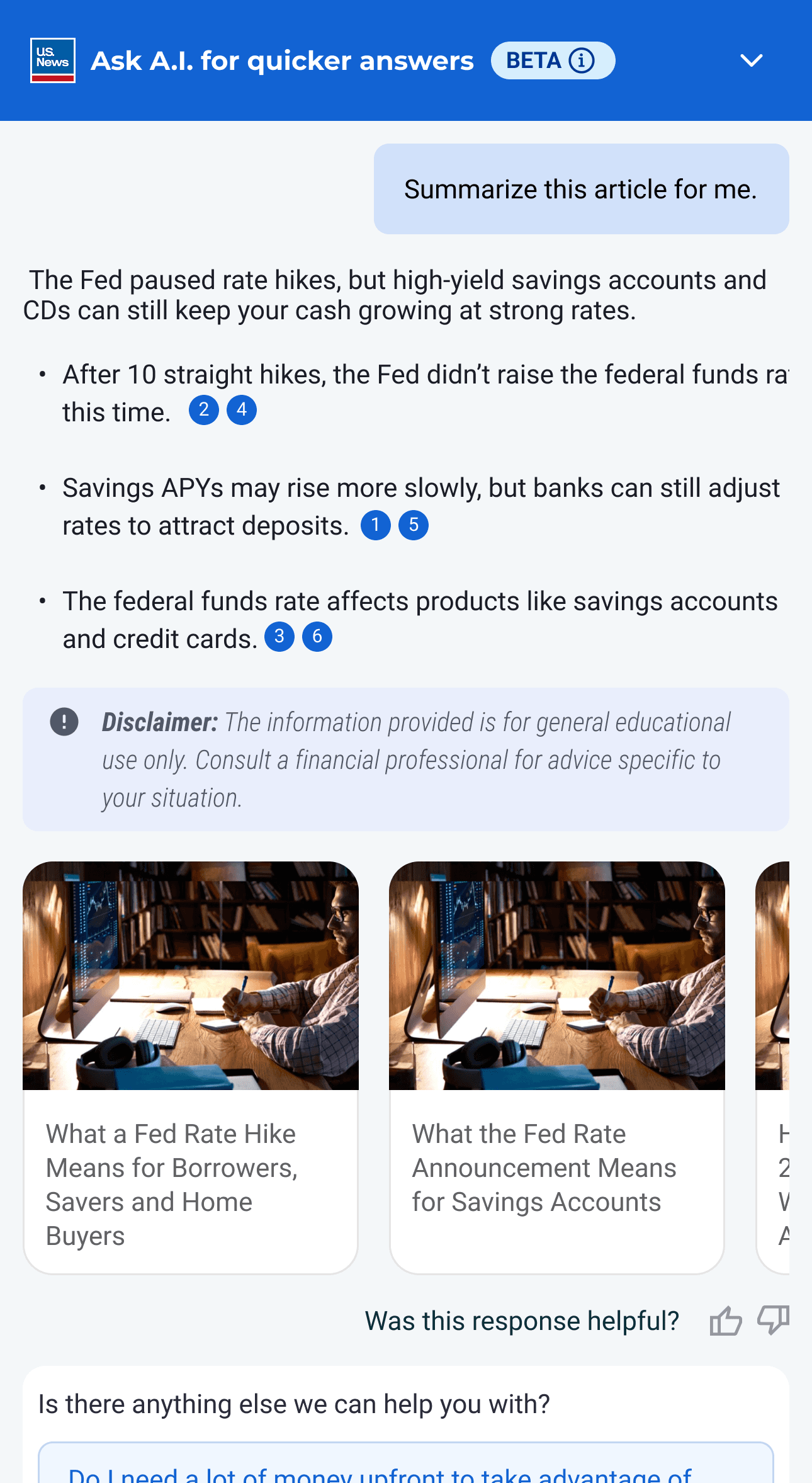
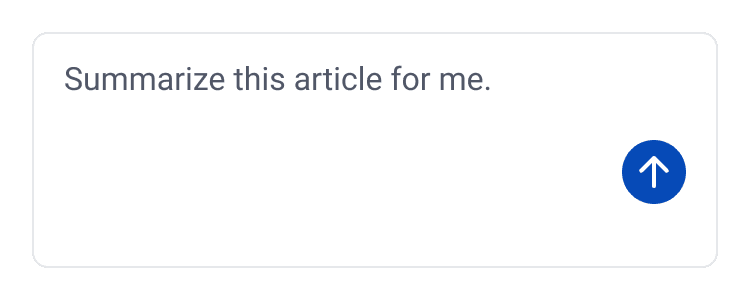
Entry + Monetization
On Money article pages, entry is a monetization decision: too quiet gets ignored, too loud feels like an ad and steals right-rail attention.
We placed the AI entry near the reading flow so it’s discoverable at the moment of need—without shifting layout or displacing right-rail inventory.
Intent-based Start
Money articles vary wildly (explainer vs. comparison vs. “best X”), so a fixed list of “popular questions” becomes irrelevant fast.
We kept the entry simple: 3 starters per article. The first is always Summarize for instant, low-risk value.
The other two are dynamic—we infer the article template from the headline and page structure, then recommend the most likely reader tasks (compare, estimate, decide, or follow steps) so users can start without figuring out what to ask.
Fixed
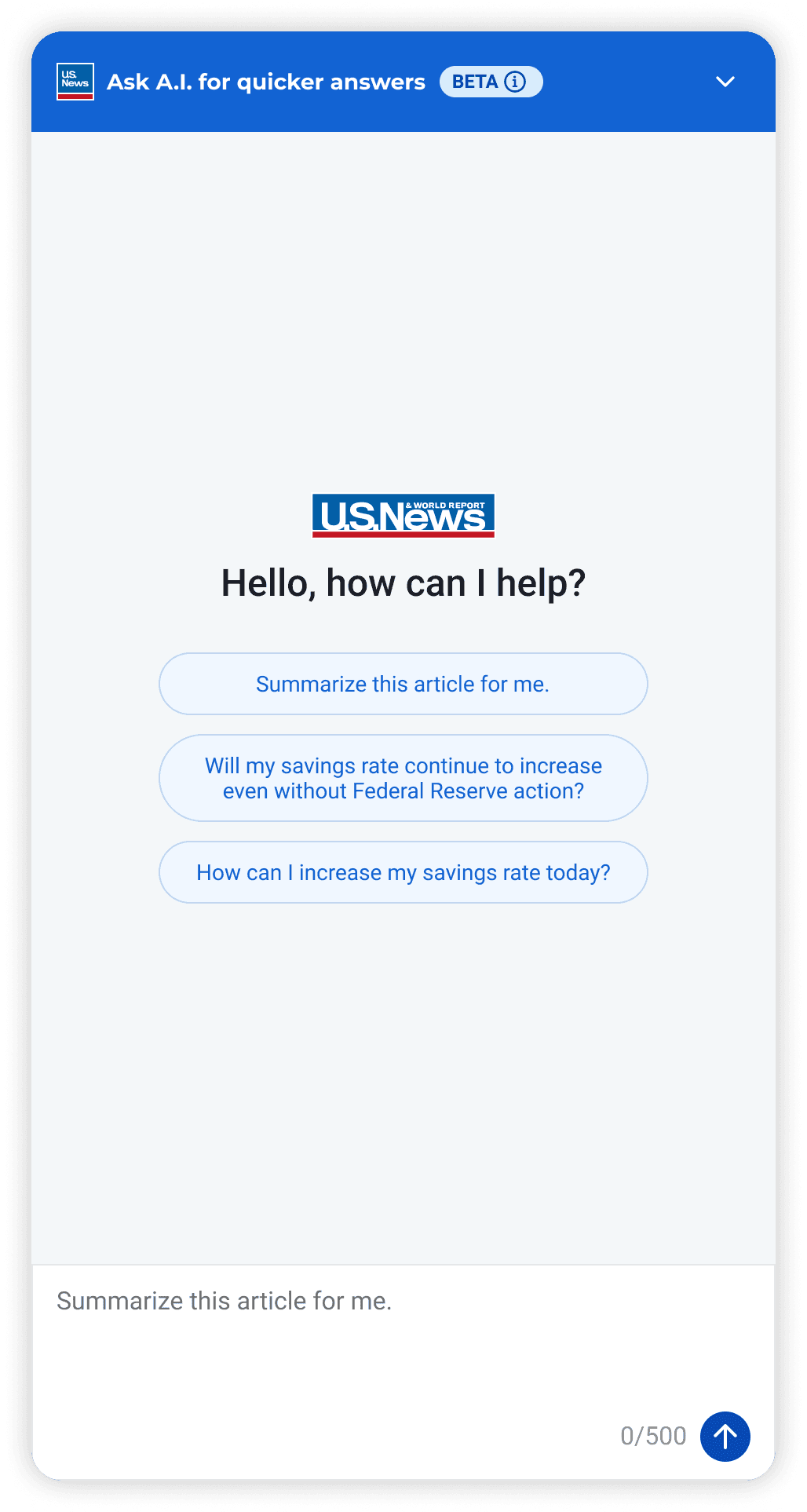
Output Structure
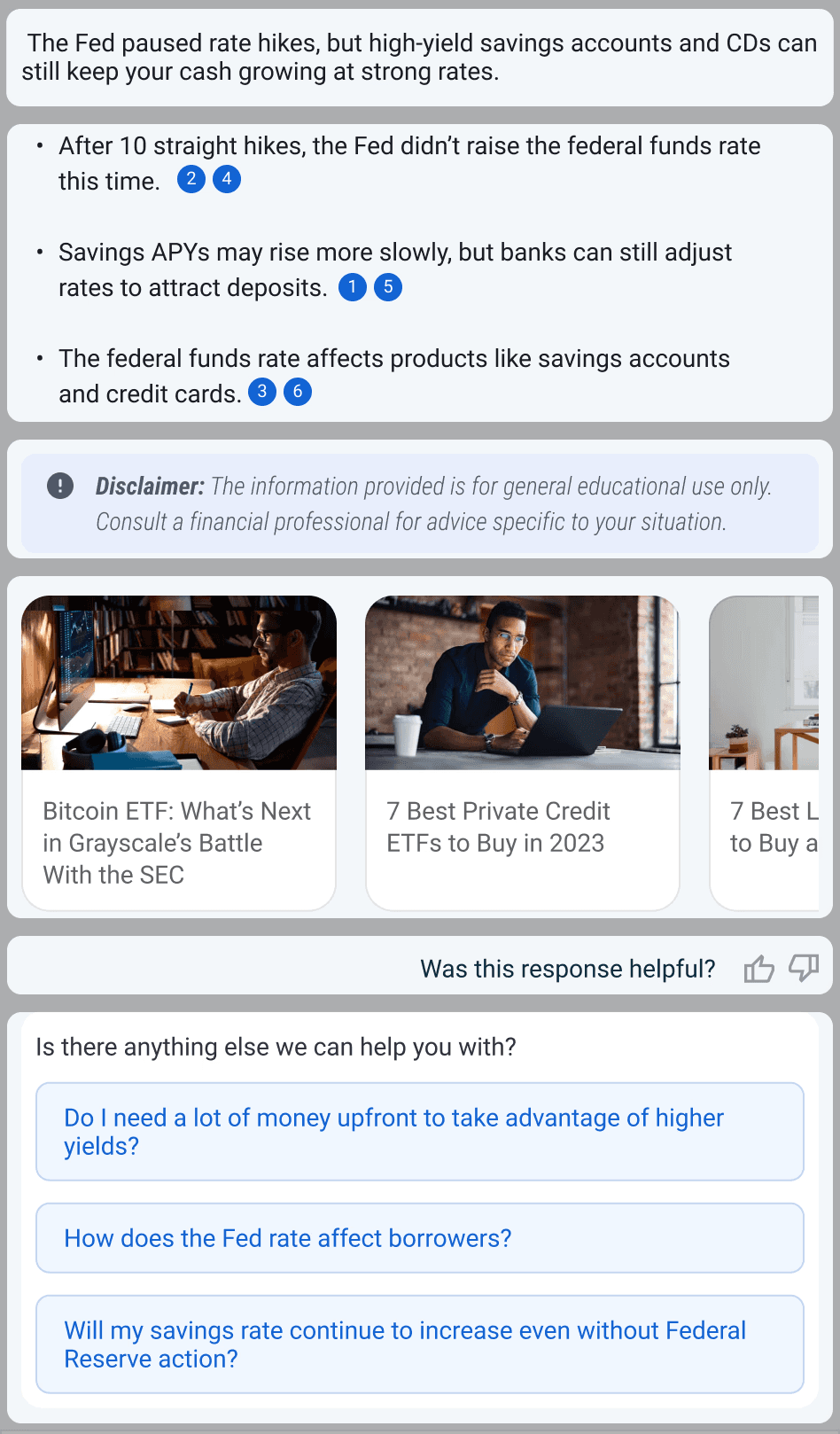
We didn’t treat the assistant as “a chat that replies in text.” We treated every reply as a designed UI component—and the component changes based on the user’s intent.
The model first recognizes what the user is trying to do (summarize / explain / compare / calculate / decide), then renders the response in the format that best supports that task: bullets for scanning, tables for comparisons, calculator cards for estimation, and action routes for “what next.”
Summary
Key bullets
Disclaimer
Feedback
Next steps
Trust Guardrails
In finance, the worst failure isn’t “not helpful”—it’s “sounds confident but wrong,” or “feels like hidden promotion.” One bad moment kills trust.
We grounded answers in the article and surfaced “what this is based on” through citations or clear references when needed.
When the article can’t support a direct recommendation, the assistant shifts to a safe mode: explain limits, ask a couple of targeted questions, or offer neutral next steps.

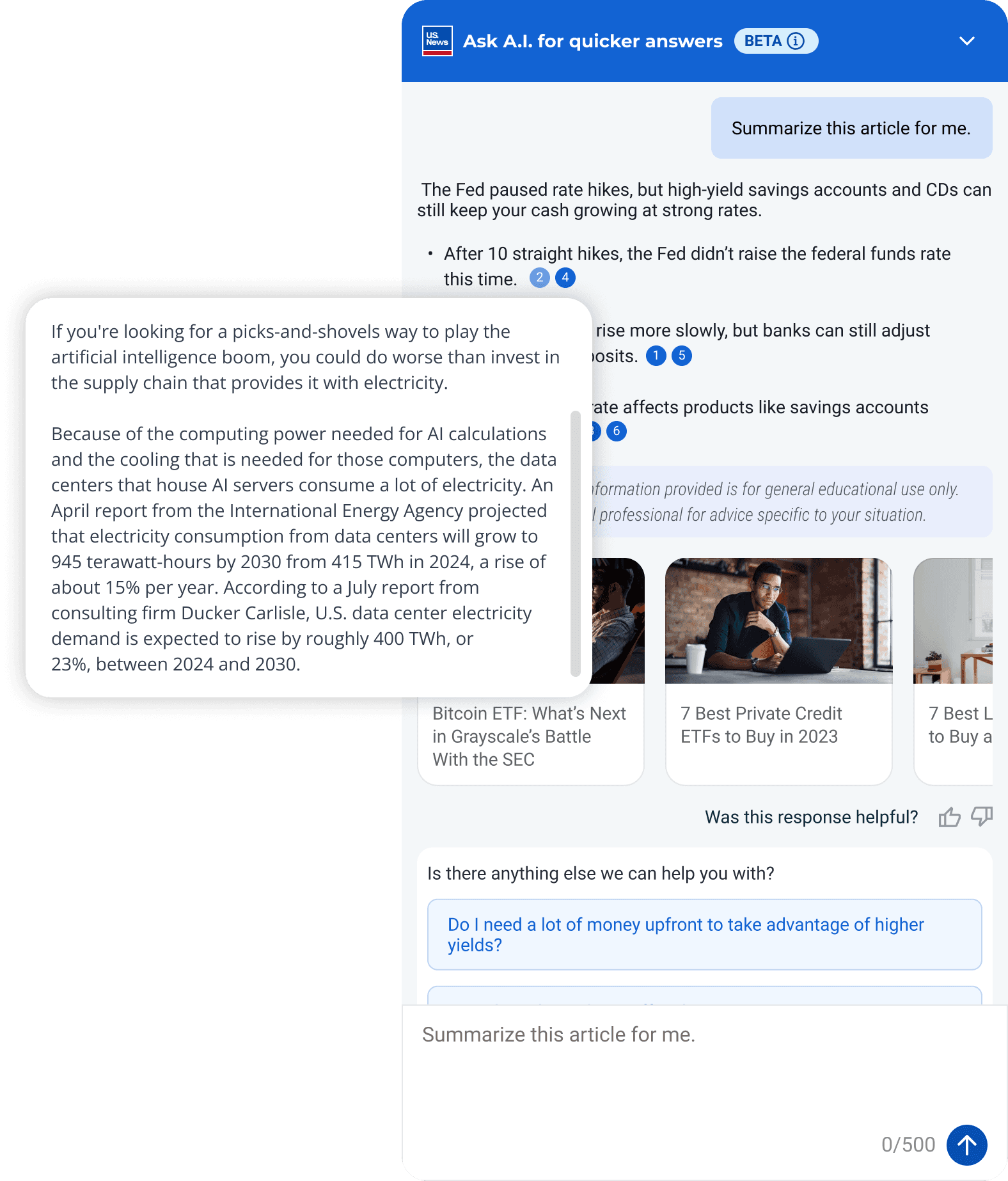
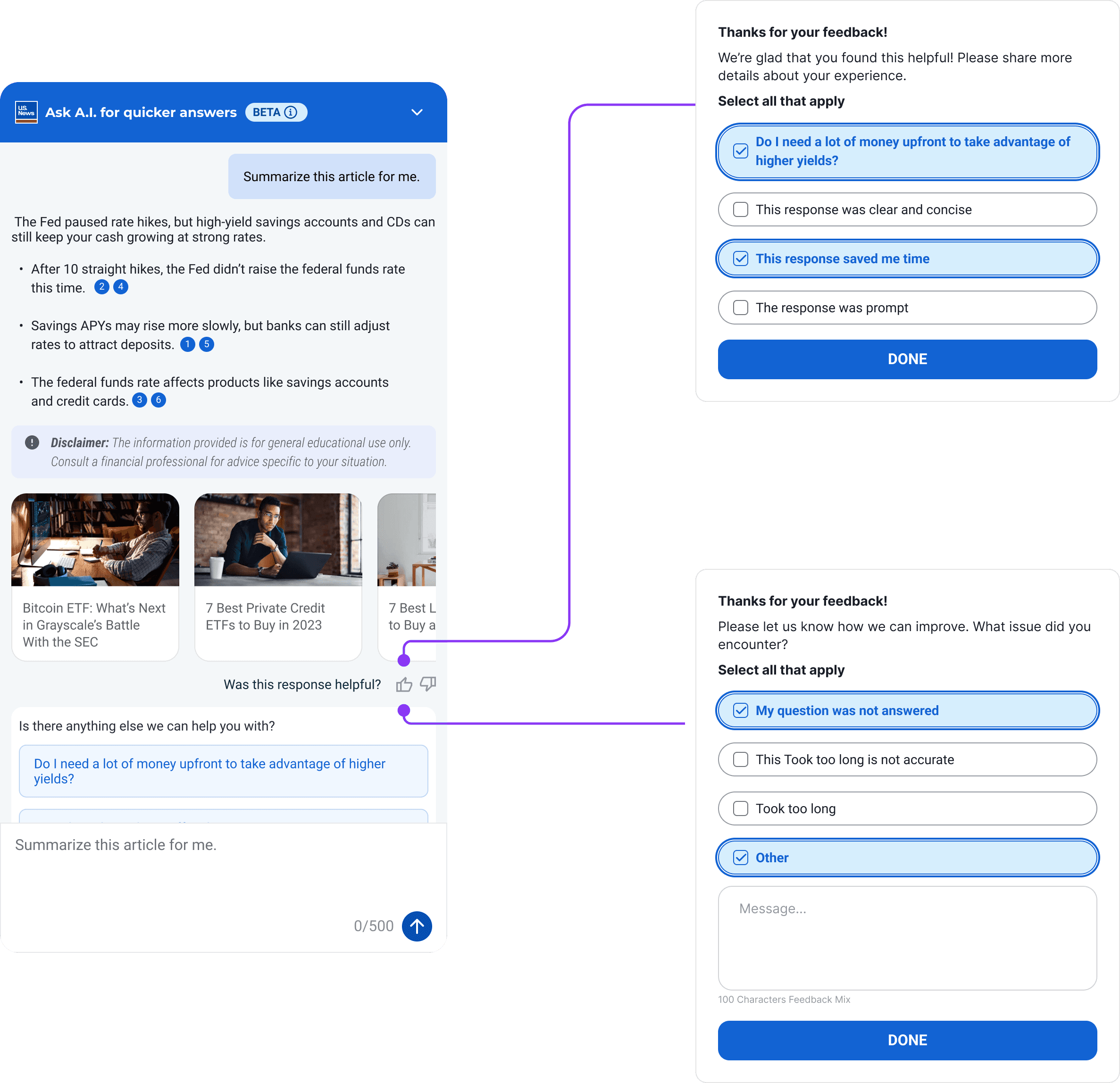
Mobile & Tablet Adaptation
We also designed responsive versions for Mobile and Tablet, because most USN Money traffic lands on articles from search, and a “desktop-style assistant” simply doesn’t translate to small screens.
The goal on smaller devices was to preserve the same outcome (understand faster → take a next step) with less UI weight and zero disruption to reading.
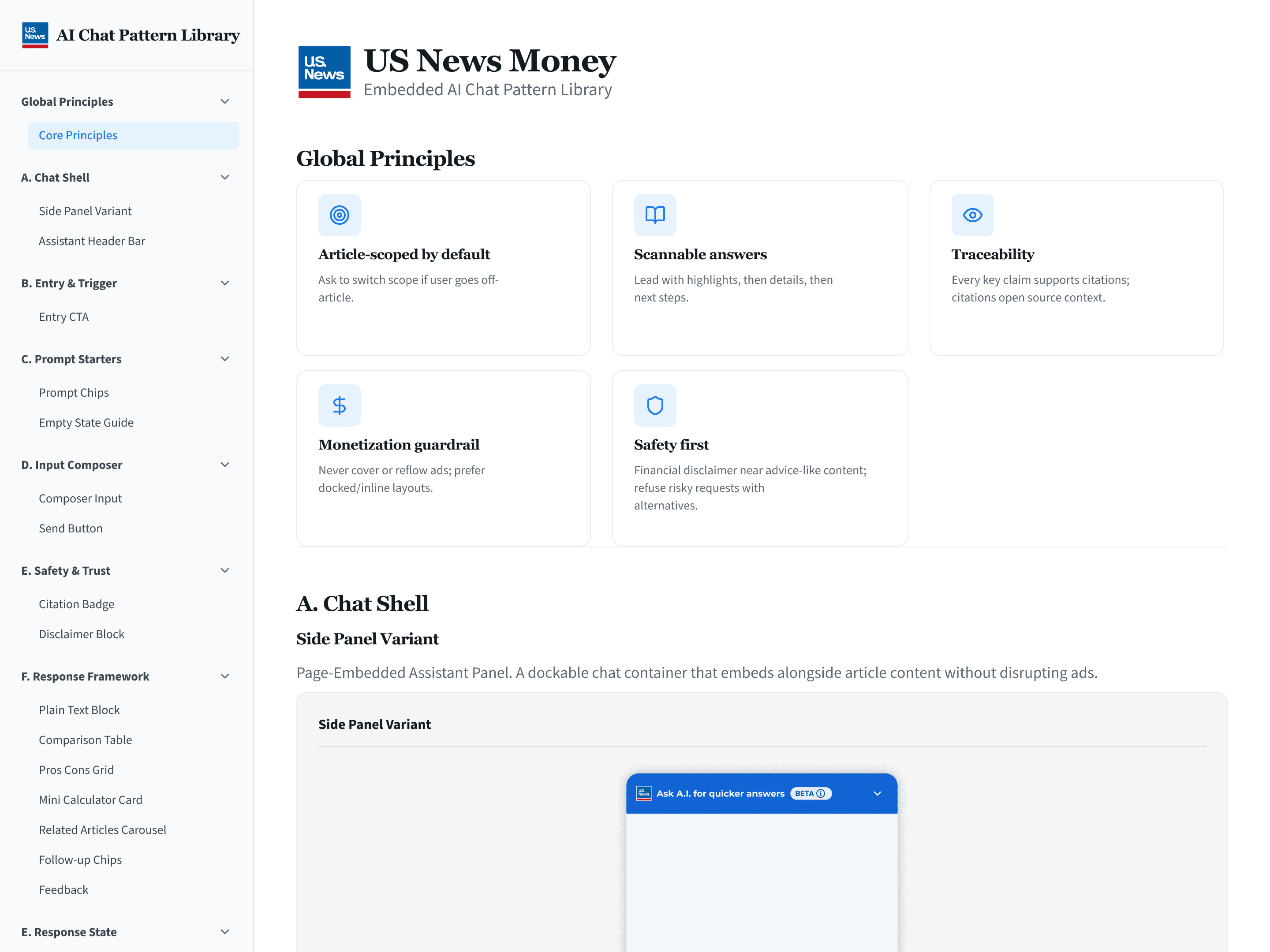
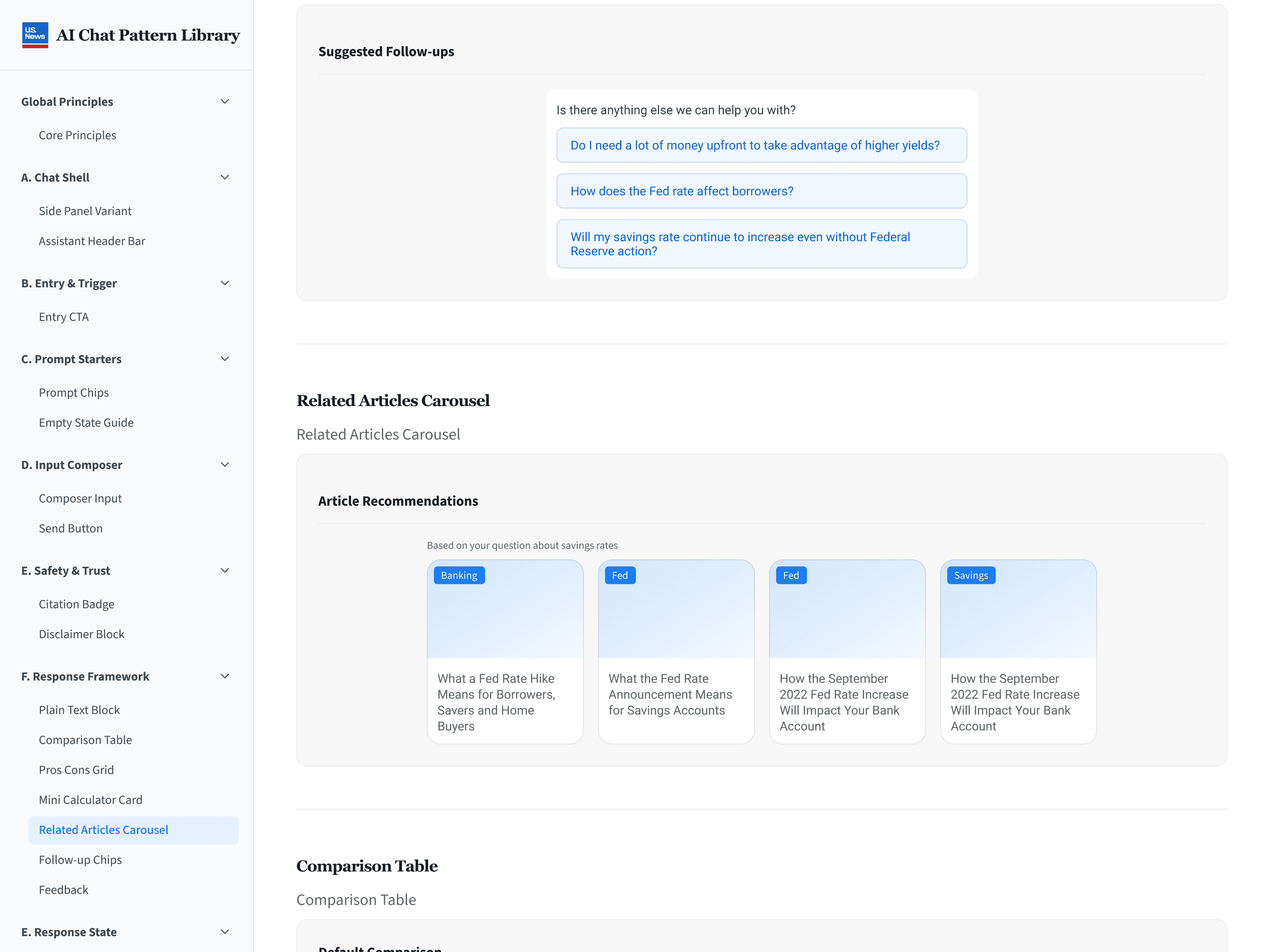
Reusable AI Chat Component
After the experiment, we didn’t treat the AI chat as a one-off feature—we productized it. We broke the chat experience into reusable components (entry, intent prompts, answer templates, guardrails, and fallback states), documented them as a shared spec, and shipped them to the team as a plug-and-play kit so other pages/modules could adopt the same “task-driven assistant” pattern without reinventing the UX each time.
Result & Next
The assistant proved it can turn “I understand” into “I do something next”—users were more likely to continue exploring and take downstream actions after interacting with it.
The trade-off showed up in our guardrails: when the entry drew attention at the wrong moment, it competed with the page’s monetization surfaces and reduced key business signals.
We’ll keep the winning behavior and remove the risk: make the assistant consistently end with a clear “path forward” (related content/tools + a few follow-up options), because that’s what drives meaningful progression. On the entry side, we’ll tighten when and how it surfaces—lighter presence by default, stronger intent matching, and stricter attention budgeting—so it stays discoverable without stealing focus from revenue-critical areas.
Where it succeeded
Views per user
1.09
Lead rev per user
$0.07
Where it fell short
Ad revenue per user
$0.04
Signups per user
0.0075
.say hello