Designers, your TITLE may be the first thing AI changes.
I’ve been studying how AI-native companies hire designers — and the shift is starting to show up in the titles first.
The titles we know
Product Designer. UX Designer. Interaction Designer. Visual Designer.
The titles now appearing across AI and AI-adjacent product teams
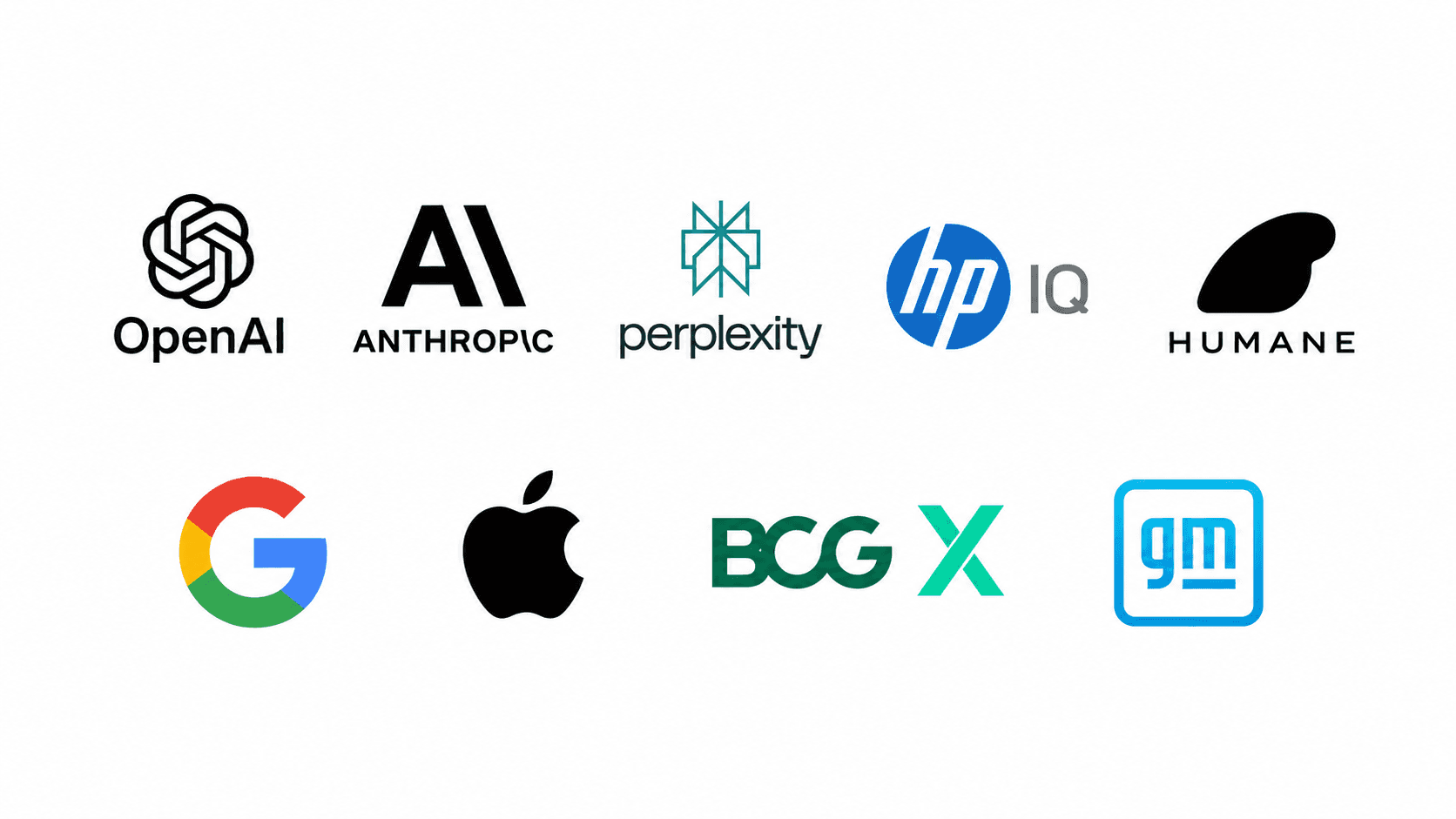
→ OpenAI — Member of Design Staff
→ Anthropic — Member of Technical Staff
→ Perplexity — Member of Technical Staff, Product Design
→ HP IQ / Humane — Lead Intelligent Systems Designer
→ Google — Senior Content Designer, Search AI
→ Apple — AI Experience Researcher
→ BCG X — AI Experience Designer
→ GM — Senior Conversational AI Designer
At first glance, this looks like rebranding. But I don’t think that’s the interesting part.
The more interesting signal is this:
AI is changing what designers are actually expected to design.
Traditional product design has largely focused on interfaces, flows, information architecture, component libraries, usability, accessibility, and handoff to engineering.
These skills still matter. But AI products introduce a different class of design problems.
Designers are increasingly being asked questions like:
When should AI take initiative, and when should it wait?
How do users build trust with a system they can’t fully predict?
How should AI communicate uncertainty without destroying confidence?
How should agents collaborate with humans across multi-step tasks?
Where should control belong — with the user, the system, or both?
How do you design for behavior, not just appearance?
These are no longer only interface problems.
They are system problems, behavior problems, trust problems, and orchestration problems.
And the titles are starting to reflect that shift.
The labor market data points in the same direction.
Autodesk’s 2025 AI Jobs Report analyzed nearly 3 million job postings across Design and Make industries and found that, in AI-specific listings, design skills surpassed coding, cloud, and other technical competencies as the most in-demand capability.
PwC’s 2025 Global AI Jobs Barometer found that skills in AI-exposed jobs are changing 66% faster than in less exposed roles.
Lightcast’s 2025 analysis found that job postings requiring generative AI skills in non-IT roles increased 9x from 2022 to 2024.
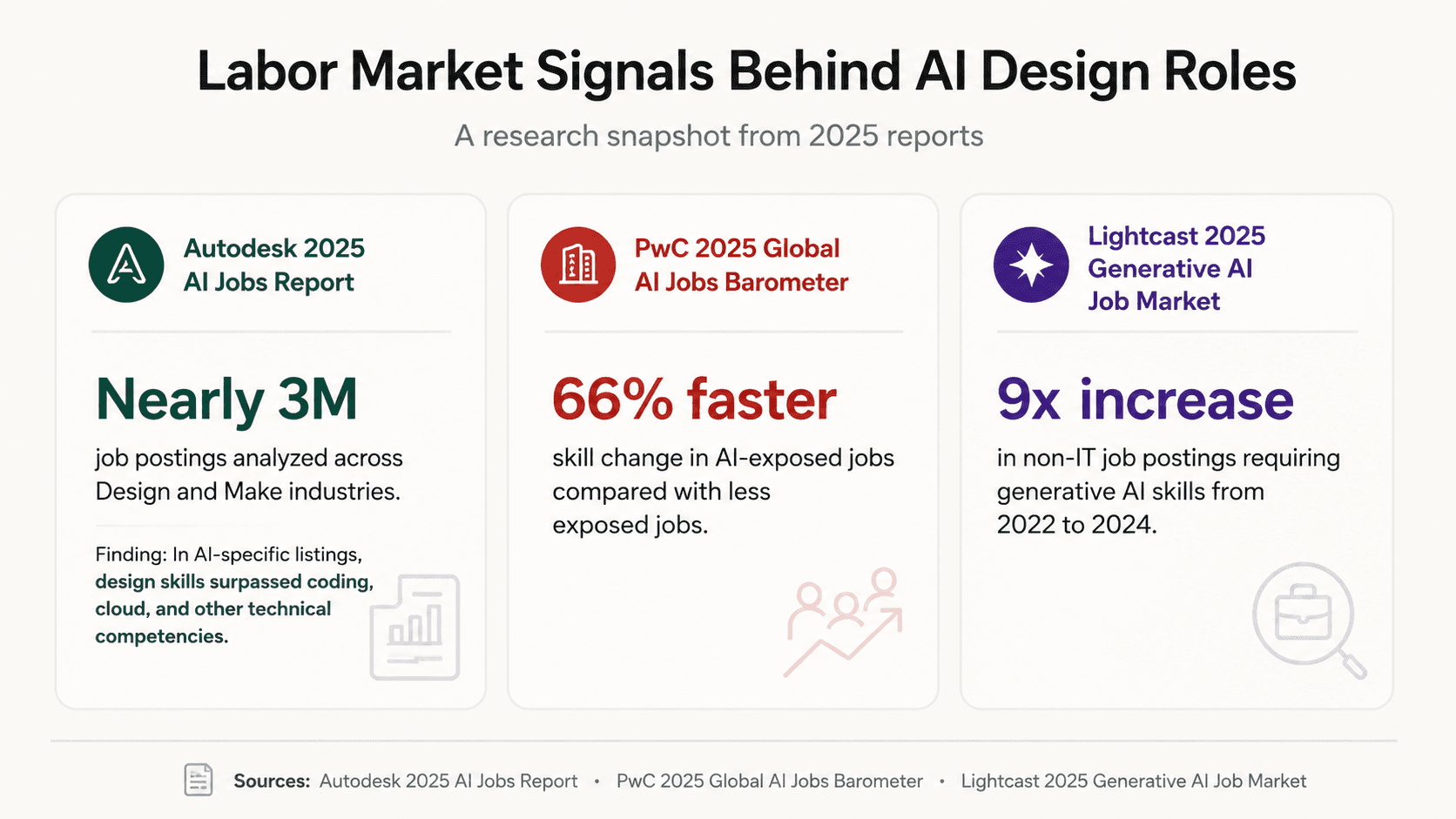
This doesn’t look like a temporary Silicon Valley naming trend.
It looks more like a broader shift in what organizations expect from people building AI products.
One historical detail makes this even more interesting.
“Member of Technical Staff” is not a new AI-era invention.
It has roots in Bell Labs — one of the most influential research institutions of the 20th century.
At Bell Labs, MTS was part of a professional technical ladder associated with deep contribution to research, engineering, and systems-level innovation.“
Seeing AI companies use this language today feels meaningful.
It suggests that some AI-native companies may see themselves less like traditional software organizations — and more like research-driven product labs, where the boundaries between research, engineering, product, and design are becoming increasingly fluid.
The work itself is changing too.
AI product teams increasingly emphasize:
Prototype-first workflows
Designing with code
Rapid validation
Behavior testing alongside traditional usability testing
System reasoning
Orchestration
Evaluation against real model outputs
In many AI products, the most important parts of the experience are no longer just the screens.
They are response quality, interaction timing, memory, adaptability, agent behavior, model uncertainty, and trust recovery.
That may be why roles like these are becoming more visible:
Design Engineer · AI Prototyper · Creative Technologist · AI Experience Designer · Conversational AI Designer · Intelligent Systems Designer.
To be clear: Product Design is not disappearing.
OpenAI still hires Product Designers.
Google still hires UX and Content Designers.
Apple still hires across Human Interface Design.
The point is not that the old titles are gone.
The point is that the meaning behind the title is expanding.
The designers shaping AI-native products may not only shape screens.
They may shape behavior, trust, memory, feedback loops, and the relationship between people and intelligent systems over time.
Maybe “Product Designer” survives for another decade.
But its center of gravity is already moving.
And the title may be the first visible clue.
Sources
Autodesk 2025 AI Jobs Report · PwC 2025 Global AI Jobs Barometer · Lightcast Generative AI Job Market 2025 · OpenAI Careers · Anthropic Organization Profiles · Perplexity Team Profiles · Google Careers · Apple Jobs · BCG X Careers · GM Careers · HP IQ Careers · Bell Labs history via A. Michael Noll
date published
May 11, 2026
reading time
5 min read